

The UK construction industry has undergone a significant transformation over the last two decades. Gone are the days when a simple recommendation was enough to secure a high-profile role on a major building site. Today, the industry is driven by safety standards, quality assurance, and formal proof of competence. For anyone working in the wood trades, obtaining a Carpentry NVQ is no longer just an option but a professional necessity. This qualification serves as a benchmark for skill, ensuring that every individual on a site meets the rigorous standards set by the industry and the government.
A National Vocational Qualification (NVQ) is fundamentally different from traditional academic certificates. Instead of sitting in a classroom and taking written exams, candidates are assessed on their ability to perform their job in a real-world environment. This practical approach makes it the preferred route for experienced tradespeople who may have the skills but lack the formal paperwork to prove it. Whether you are a seasoned professional with years of experience or a newcomer looking to establish yourself, understanding the nuances of the qualification process is the first step toward a more secure and lucrative career.
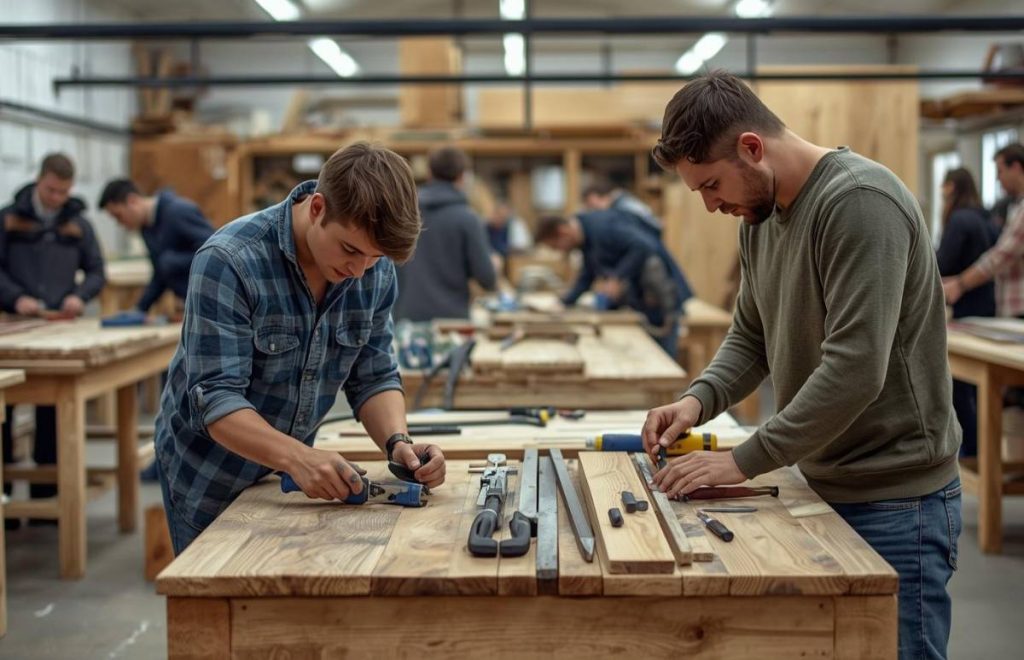
Understanding the Carpentry NVQ Framework
The Carpentry NVQ is designed to reflect the actual tasks performed by carpenters on a daily basis. It is a work-based qualification that recognises the skills and knowledge you already possess. Because it is competency-based, there is no fixed duration for the course; it depends entirely on how quickly you can provide evidence of your work. The framework is structured to cover various aspects of the trade, including site carpentry, architectural joinery, and structural timber work.
One of the primary reasons professionals seek this qualification is to obtain a Construction Skills Certification Scheme (CSCS) card. In the current climate, most major contractors and homebuilders require all workers to hold a valid CSCS card. Without the relevant NVQ, you may find yourself restricted to a green labourer card, which often results in lower pay and fewer opportunities for advancement. By achieving a Level 2 or Level 3 NVQ, you unlock the Blue Skilled Worker card or the Gold Advanced Craft card, respectively.
The Different Levels of Qualification
Depending on your current skill level and your career aspirations, you will need to choose the appropriate NVQ level. Each level represents a different tier of responsibility and technical expertise:
- Level 2 NVQ in Site Carpentry: This is the standard qualification for most working carpenters. It covers essential tasks such as installing first and second fixings, structural carping, and basic maintenance. It is the minimum requirement for a Blue CSCS Skilled Worker card.
- Level 2 NVQ in Bench Joinery: This is aimed at those who work primarily in a workshop environment, producing timber products such as doors, windows, and furniture.
- Level 3 NVQ in Occupational Work Supervision: For those looking to move into management, this level focuses on leadership, health and safety management, and coordinating site activities.
- Level 3 NVQ in Site Carpentry: This is an advanced qualification for those performing complex tasks like intricate roofing structures and specialised timber work. It leads to the Gold CSCS card.
How the Assessment Process Works
The beauty of the Carpentry NVQ lies in its flexibility. Because the assessment takes place on-site, there is minimal disruption to your working day. You do not need to take weeks off to attend a college centre; instead, an assessor will visit you while you work. This process is designed to be as unobtrusive as possible, allowing you to earn while you learn and prove your competence in your natural working environment.
The assessment generally involves several key components that allow the assessor to build a comprehensive picture of your abilities:
- On-Site Observations: An assessor will watch you perform specific tasks to ensure you are following correct procedures and safety protocols.
- Professional Discussion: You will engage in a conversation with the assessor to explain why you chose certain methods or how you would handle specific challenges.
- Portfolio of Evidence: This includes photographs of your work, witness testimonies from supervisors, and copies of site documents like risk assessments or drawings.
- Knowledge Questions: You may be asked to provide written or verbal answers to questions regarding building regulations and health and safety legislation.
For highly experienced carpenters who have been in the trade for many years but lack a qualification, there is often a fast-track route known as the Experienced Worker Practical Assessment (EWPA). This can sometimes allow a veteran tradesperson to achieve their NVQ in a much shorter timeframe by combining a one-day practical assessment with a robust professional interview.
The Career Benefits of Becoming Qualified
Investing time and effort into a Carpentry NVQ yields significant long-term rewards. Beyond the immediate benefit of obtaining a CSCS card, the qualification enhances your professional reputation. Clients and employers are more likely to trust a carpenter who has been independently verified as competent. This trust often translates into more consistent work, higher day rates, and the ability to bid for larger, more profitable contracts.
Furthermore, the qualification provides a clear path for career progression. Many carpenters start at Level 2, gain a few years of experience, and then move on to Level 3. From there, the door opens to roles such as site foreman, project manager, or even building inspector. The NVQ is a lifetime qualification; once you have earned it, it never expires, providing you with a permanent credential that is recognised across the UK and often internationally.
Key Skills Covered in the Assessment
During your journey toward the qualification, you will be expected to demonstrate proficiency in several core areas. These skills are essential for maintaining high standards on-site and ensuring the longevity of the structures you build. Common units of study and assessment include:
- Setting up and using circular saws and other power tools safely.
- Installing floor joists, partitions, and roofing components.
- Fitting doors, windows, and kitchen units to a high standard of finish.
- Understanding and interpreting construction drawings and specifications.
- Maintaining a safe and organised working environment in accordance with HSE guidelines.
- Communicating effectively with other trades and site management.

Choosing the Right Training Provider
Selecting a reputable training provider is crucial to a smooth NVQ experience. You want a centre that offers experienced assessors who understand the realities of the building site. A good provider will offer support throughout the evidence-gathering process, helping you to organise your portfolio efficiently and ensuring you are fully prepared for your assessments. They should be accredited by recognised awarding bodies such as City & Guilds or NOCN.
When researching providers, look for those that offer transparent pricing and a clear timeline for completion. Some providers specialise in certain regions, while others offer nationwide coverage. It is also worth checking if there are any grants or funding available; for instance, companies that pay the CITB levy may be able to claim back a significant portion of the assessment costs. This makes the qualification an even more attractive investment for both individuals and small business owners looking to upskill their workforce.
The Role of Health and Safety
A major component of any Carpentry NVQ is health and safety. The construction industry remains one of the more hazardous sectors to work in, and the NVQ process places a heavy emphasis on risk management. You will be assessed on your knowledge of the Health and Safety at Work Act, the proper use of Personal Protective Equipment (PPE), and your ability to identify and mitigate hazards on-site. This focus not only helps you pass the assessment but also ensures that you are working in a way that protects yourself and your colleagues, reducing the likelihood of accidents and downtime.
By integrating safety into the technical assessment, the NVQ reinforces the idea that a skilled carpenter is also a safe carpenter. This holistic approach to competence is what makes the qualification so respected by major contractors and safety organisations. It demonstrates a commitment to professional excellence that goes far beyond simply knowing how to cut a joint or hang a door. It shows that you are a responsible professional who understands your role within the wider context of a construction project.
As the industry continues to evolve, the demand for qualified timber professionals will only increase. Whether it is adapting to new sustainable building materials or mastering complex modern methods of construction, the foundation provided by a formal qualification is invaluable. It provides the confidence to take on new challenges and the credentials to prove that you are among the best in your field.

James is a furniture designer specializing in ergonomic and stylish custom office desks. He focuses on blending functionality with modern aesthetics to create workspaces that enhance productivity.